“I remember your genuine faith, for you share the faith that first filled your grandmother Lois and your mother, Eunice. And I know that same faith continues strong in you. This is why I remind you to fan into flames the spiritual gift God gave you when I laid my hands on you. For God has not given us a spirit of fear and timidity, but of power, love, and self-discipline.”
2 Timothy 1:5-7
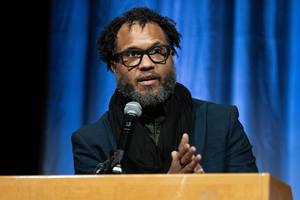
Dr. Kyle R. Williams is a scholar-practitioner whose work is grounded in a simple but deeply personal belief: people need to know that they matter.
Their scholarship centers on mattering, particularly the importance of creating communities where people know they are seen, valued, needed, and appreciated. For Dr. Williams, mattering is more than a scholarly framework. It shapes how they live, how they lead, and how they advocate for students, professionals, and communities that have historically been underserved, overlooked, or expected to navigate institutions without the support they deserve.
In November 2023, Dr. Williams formalized DrKRWSpeaks as an extension of that commitment. After witnessing significant changes within education and the workforce over the previous decade, they wanted to create a platform that would allow them to continue challenging institutions and leaders to think differently about the people they serve. Through consulting, speaking, teaching, and scholarship, DrKRWSpeaks creates opportunities to examine leadership, organizational culture, inclusion, student success, and the changing needs of today’s students and workforce.
At the center of this work is Dr. Williams’ belief that education should provide people with opportunities to learn, question, grow, affirm their values, and develop the knowledge and confidence necessary to make an impact on the world around them.
Most recently, Dr. Williams served as Assistant Vice President and Dean of Intercultural Engagement at Oberlin College and Conservatory, where they led the Center for Intercultural Engagement. The Center brought together International Student and Scholar Services, Religious and Spiritual Life, Disability and Access, Gender, Sexuality and Attraction Initiatives, and the Multicultural Resource Commons.
Upon arriving at Oberlin, Dr. Williams established a Vision Toward Intentional Inclusion, grounded in the belief that inclusion is never a destination. Institutions must continually assess who their students are, understand how their needs are changing, and determine whether programs, policies, resources, staffing, and financial commitments reflect those realities. For Dr. Williams, inclusion requires more than statements of institutional values. It requires intentional decisions that create meaningful pathways toward student success.
While at Oberlin, Dr. Williams also served as Deputy Title IX Coordinator for Student Affairs, Athletics Diversity and Inclusion Designee, and Campus Posse Liaison. These responsibilities reinforced an important principle within their leadership: inclusion cannot reside within a single office or division. It must be reflected throughout the institution and embedded within how students experience their education, seek support, engage their communities, and develop a sense of belonging.
Prior to Oberlin, Dr. Williams served as Special Advisor to the Senior Vice President and Dean for Campus Life at Emory University. In this role, they oversaw what would become the newly envisioned Dean of Students portfolio, with leadership over Student Conduct, Student Case Management and Intervention Services, the Barkley Forum, Parent and Family Engagement, and Belonging and Community Justice, which included the Emory Women’s Center, LGBT Life, Centro Latinx, Emory Black Student Union, Asian Pacific Islander and Desi American initiatives, and Emory First.
Dr. Williams also served as Director of Emory Student Centers, where their portfolio included Civic and Community Engagement and Student Involvement and Leadership Transitions.
Dr. Williams chaired the University CARE Team and served on the enterprise Threat Assessment Team. They worked to strengthen the Bias Support Services team and led projects reviewing how the enterprise could streamline support for students transitioning through voluntary, involuntary, and medical leaves, and their returns from them. They also strengthened support for the Black Male Initiative.
Working alongside senior leadership, Dr. Williams also helped assess and strengthen Campus Life operations, including assessment practices, policies and procedures, organizational and staffing structures, fiscal management, student support systems, institutional partnerships, and crisis response.
Across leadership roles at Oberlin College and Conservatory, Emory University, Oglethorpe University, Washington University in St. Louis, Texas A&M University-Commerce, The College of New Jersey, Old Dominion University, Virginia Wesleyan University, and Stony Brook University, one question has remained central to Dr. Williams’ work:
Do the people within this community know that they matter?
That question is not only professional. It is personal.
Over the past decade, Dr. Williams has spent considerable time reflecting on mattering and the ways it has shaped their own life and family. Their understanding of the concept reaches far beyond the campuses they have served. It is rooted in family, sacrifice, faith, education, and the generations whose choices made their own journey possible.
Born in a rural Appalachian community in eastern Ohio, Dr. Williams often reflects on the sacrifice of their mother, who left home when they were three years old to serve in the United States Navy. Her decision represented sacrifice, determination, and a desire to create greater possibilities for herself and her child. Her journey remains one of the foundations of Dr. Williams’ commitment to helping others find places where they are supported, valued, and able to move forward.
Education became an important part of that story. Dr. Williams watched their mother return to college and earn her associate, bachelor’s, and master’s degrees within five years. They also witnessed the community that surrounded her throughout that journey, including classmates who became extended family and a university that helped make her aspirations possible.
Those experiences taught Dr. Williams that achievement is rarely an individual act. People move forward because someone believed in them, invested in them, encouraged them, prayed for them, challenged them, or reminded them that they belonged.
That lesson continues to shape their life and leadership.
Dr. Williams often reflects on the prayers of their grandmothers, Shirley, RuthAnn, and Roberta, and the generations of women who came before them. Their family story stretches through ancestors who endured slavery in Virginia, others who crossed the Atlantic from Ireland, and generations who eventually built their lives in rural Ohio. Their journeys carried sacrifice, faith, survival, hope, and dreams for generations they would never meet.
Dr. Williams sees themselves as part of that continuing story.
Their work in education, scholarship, leadership, and DrKRWSpeaks is ultimately an extension of that inheritance: creating opportunities for others, opening pathways where barriers have existed, challenging systems that prevent people from flourishing, and reminding individuals and institutions alike that mattering must be more than something we talk about.
It must be something people can feel.
For Dr. Williams, that is the work. That is the calling. And that is the dream they continue to carry forward.

